🎬心得【風之谷】 by 宮崎駿| Review 《Nausicaä of the Valley of the Wind》 by Miyazaki Hayao, 1984
#Netflix #電影 #漫畫 #生態危機 #共存 #盲目追求科技
過去對於《風之谷》只有些模糊的印象,主要來自於小時候木直笛樂譜本中的一首曲子「王蟲交流」,這次完整看過電影後,我才真正了解它的故事和大致世界觀。雖然這是一部40年前的作品,但它的畫質、作畫水準以及配音配樂放在今天看來也不顯老氣,卡通動漫的魅力就在於此,即使年代久遠,依然能保持一種不會被時間淘汰的生命力。
電影結局處理得有些突兀,讓人覺得像是經費不足般草率。表面上看似解決了風之谷和同盟軍事國多魯美奇亞的危機,沒有重蹈培吉特市覆轍,但實際上並未真正解決任何長期存在的問題或謎團;稍稍研究之後知道了漫畫還有後續,看來這方面就需要去看原作來補完了。
已經是老電影了,但這部設定上真的蠻有趣的,希望大家都能自行體會。以下劇透。
劇情設定上,工業文明於數百年間擴展至全世界,並造就了巨大的產業社會;透過濫用大地資源、破壞大氣層、恣意改造生命體,文明於1000年後臻於頂點後,隨即急遽衰退了下去。在「火之七日」這場戰爭後,世界到處佈滿有毒物質,都市相繼瓦解,複雜高水準的技術體系崩潰,地表所到之處幾乎皆已化為不毛之地,此後科技一蹶不振,人類因而苟延殘喘於衰微時代。是否很像核戰後的世界呢?
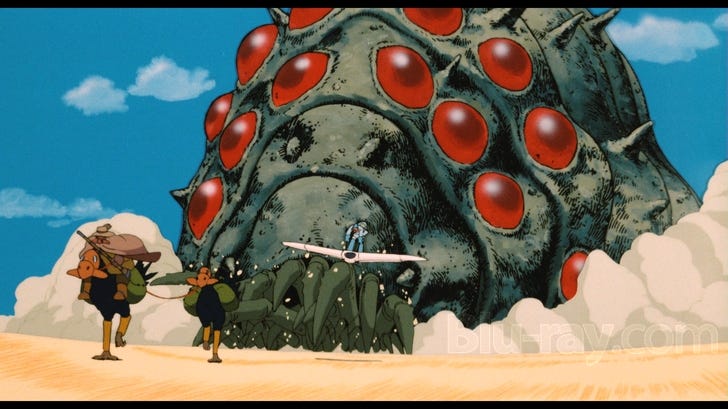
這時被舊文明所污染的大地上,重新出現了能抽離有毒物質、快速擴張的菌類森林生態系「腐海」,其中孕育著各種巨大的蟲類與植物,像生命之肺般默默淨化著舊文明的罪孽,其中體型最大的就是「王蟲」;然而腐海的孢子會侵蝕人類肺部,人類因此面對了龐大的生存壓力。這設定很是有趣,通常在氧氣濃度不高的自然環境下,是不會產生體型過於巨大的生物的,地球在石炭紀(Carboniferous period)期間,大氣氧氣含量曾高達約35%(相比現在約為21%),當時的確有許多體型巨大的昆蟲,如翅展超過70公分、肉食的巨脈蜻蜓。這些生態是自然出現的嗎?抑或是人為操作?
在這之後,我也將漫畫版看完了,電影和漫畫內容大方向上區別不大,自然/舊人類的自私正忙著淨化,新人類卻面對了囚徒困境,對未來與未知恐懼而相互阻撓、互不合作,了解全貌後對新世界既期待又恐懼。想想也是理所當然,要是沒有沙漠隔擋,腐海還會持續擴大,能生活的土地、資源愈來愈少,每天都在檢查有無孢子入侵農作、為生存勞碌,發現舊文明的強大武力當然會想爭奪、不分享,無法分享真實思緒、互不信任大概是合作上最大的阻礙了吧,這是新舊人類之間的通病。
這次完整欣賞《風之谷》後,我感到這是一部值得反覆思考的作品,它的意義遠超越於表面的故事,而更多地啟發我們去思考人類未來的生存之道,是要改造環境?改造自己與生活方式?亦或是想辦法增加環境的總資源量?
#Netflix #Movie #Comic #Eco_Crisis #Coexistence #Blind_Pursuit_of_Tech
Until now, I only had a vague impression of "Valley of the Wind," mainly from a song called "Contact with the Ohmu" in a music book I owned as a child. After watching the movie in full this time, I finally understood its story and the overall worldview. Although it's a 40-year-old film, its visual quality, animation technique, and voice acting still hold up today, showing that the charm of animated cartoons lies in their timeless appeal, never fading with age.
The film's ending feels abrupt and somewhat careless, as if constrained by limited budget. On the surface, it resolves the crises between the Valley of Wind and the military empire Torumekian without repeating the fate of Pejitei. However, it doesn't truly address any long-standing issues or mysteries. After doing some research, I found out that there are sequels in the manga, so those aspects need to be explored through the original works.
It's an old movie, but its setting is quite interesting. I hope everyone can appreciate it on their own. ⚠Spoilers ahead.⚠
In terms of plot, industrial civilization expanded globally over several centuries, creating a productive society. By excessively exploiting natural resources and destroying the atmosphere along the way, and later freely modifying life forms, civilization reached its peak after 1000 years but then rapidly declined. Following the war "Seven Days of Fire", toxic substances spread across the world, cities collapsed one after another, complex technological systems crumbled, and the earth's surface turned into barren wastelands. From then on, most technology vanished, and humanity barely survived in a declining era. Does this remind you of a post-nuclear war world?
On this land polluted by the old civilization, a new ecosystem called "Sea of Corruption" emerged. It absorbs and removes toxic substances while expanding rapidly. This fungal forest ecosystem breeds giant insects and plants, silently purifying the sins of the old civilization. The largest among them being the Ohmu. However, the spores from the Sea of Corruption are toxic to human lungs, putting humanity under immense survival pressure. This concept is quite interesting. Typically, in low-oxygen natural environments, you wouldn't see organisms with enormous sizes. During Earth's Carboniferous period, atmospheric oxygen levels were as high as about 35% (compared to today's 21%), which indeed saw many giant insects, such as dragonflies with wingspans over 70 centimeters and meat-eating species like Meganeura. Are these ecological phenomena natural occurrences or human interventions?
There isn't much difference between the movie and the manga in terms of the main plot direction. Nature is busy purifying itself, while humanity finds itself in a prisoner's dilemma, letting fear of the future and unknowns hinder cooperation. Sadly that fear does make sense, doesn't it? If there were no deserts to block it, the Sea of Corruption would continue expanding. The livable land and resources become increasingly scarce; every day, people check for spore invasions on their crops and labor tirelessly for survival. Why wouldn't they want to fight over the remnants of Old's powerful military prowess? Sharing thoughts honestly and building trust seem to be the biggest obstacles to human cooperation as always.
After fully enjoying "Valley of Wind," I felt it's a work worth contemplating. Its significance goes beyond its surface story, encouraging deeper thinking about humanity's path to future survival — should we transform our environment, ourselves, or find ways to increase environmental resources?


留言
張貼留言