📚心得【Solar Clipper #1: Quarter Share】 by Nathan Lowell, 2007
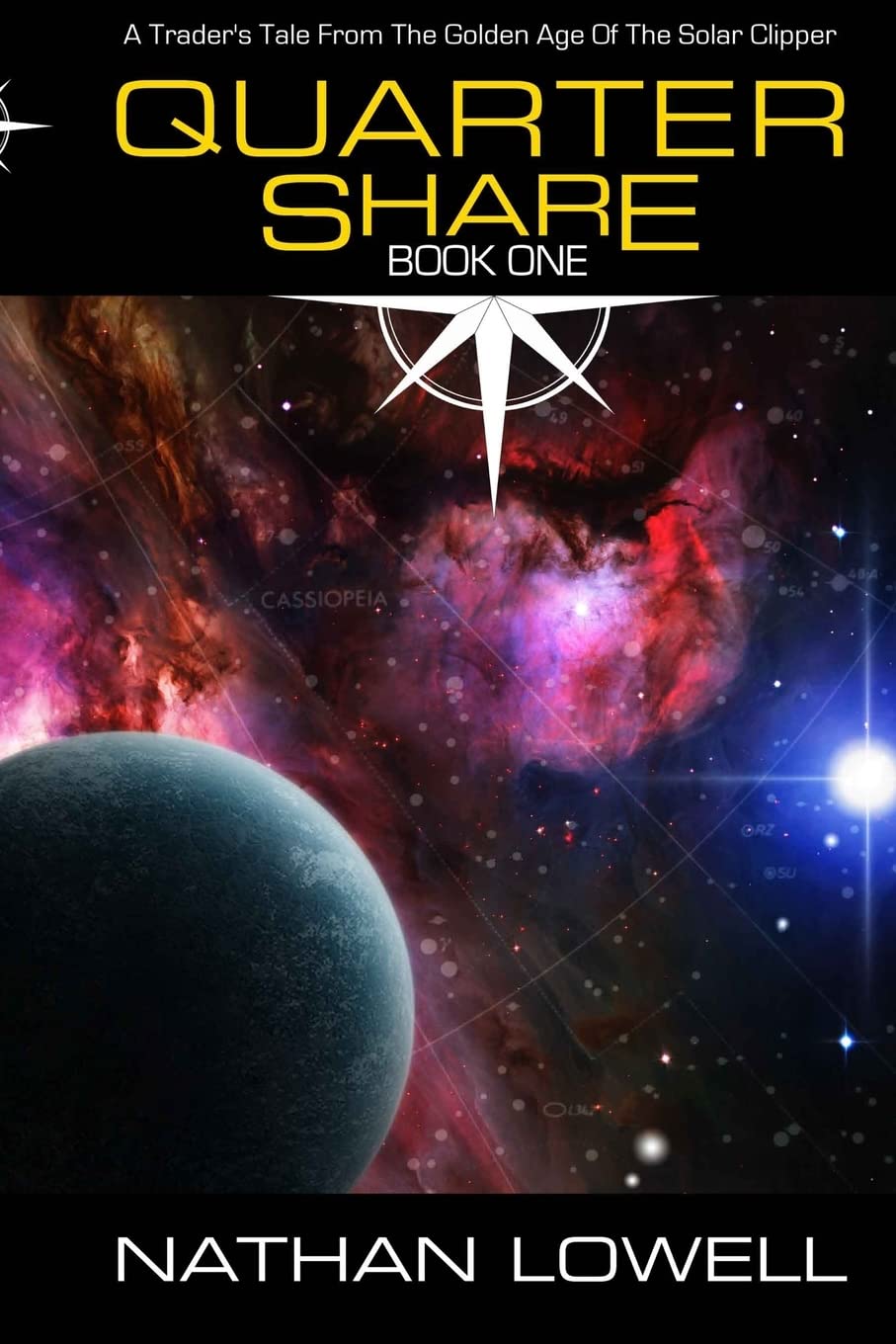
#Space_Opera #Soft_Scifi #chill #水手 #商人
Solar Clipper系列是去年參加中華科幻學會與讀樂萌共同舉辦的曬書推坑書聚時、一位熱情書友推薦的。不確定整個系列到底完結沒,目前一共出了9集,但先別被集數嚇到——作者用語如同熱鍋上的奶油般滑順,明明光是第一集就有318頁,讀起來卻像是在飛著看,怎麼騎個飛輪、頁數就又前進了30多頁,讀起來非常輕鬆。
Quarter Share敘述一名年輕小夥子(主角)因由不得不上跨星系貨輪工作,了解"遠洋"航行期間規矩、習慣船上慢節奏但充實生活的同時,逐步發現自我精進、賺取外快之道,與此同時竟也意外激勵了整艘貨船從船長到低階船員各個階層的士氣與原先較疏遠的從屬關係。
缺點也是有的,第一集看下來細節豐富、角色鮮明,主劇情雖有個具體的方向但不算複雜,個人覺得主劇情應該再多些,目前感覺起來每個港口都只是蜻蜓點水、隨波逐流;科技方面,背景設定是人類已達成如同遊戲Stellaris一般的空間跳躍技術(技術細節直接跳過),貨輪在星系間的航行長短取決於移居星球或太空站距離該星系邊陲跳躍點的遠近,一般來說都不會超過1個月,就這點來說讓我這個硬科幻讀者有些挑剔:都能達到如此科技等級了,貨輪還有需要這麼多船員嗎?全自動化的話,廚師、維生系統、隨船醫生等職業都不需存在,也可以省下走廊、起居室、衛生間等空間與重量,可以承載更多貨物,不過回頭想想最小人數的船員仍是需要的,期待每個港口都有各公司的接應人員來處理所有進出貨、買賣與財產安全事宜也許有執行面上的困難;本來也想挑剔船艙內貌似有重力的部分,因為有沒有重力對整體起居、衛浴設計會差很多,但後來發現設定上竟然有一定限度內的反重力技術(到底怎麼做到的...)就let it slide好了。
嫌歸嫌,整體的閱讀體驗還是很好的,上次能這麼輕鬆愜意的讀完一本英文科幻小說應該是2年前讀Bobiverse第一集時了吧,而且各個角色的刻畫與敘述比我看過的任何Space Opera更細緻。
IMO總分:67分,讀起來非常輕鬆愜意、毫無壓力的中上作。
核心思想:★★★☆☆ 核心討論議題是否有趣*5
劇情細節:★★★☆☆ 綜觀整體劇情的質與量*4
角色刻畫:★★★★★ 角色群的必要性與深度*3
科學軟硬:★★★☆☆ 是否符合現實物理現象*3
結局滿意:★★☆☆☆ 結局滿意度與有無餘韻*3
易讀程度:★★★★★ 閱讀時章節是否難消化*2
#Space_Opera #Soft_Scifi #Chill #Sailor #Merchant
The 《Solar Clipper》 series was recommended to me last year during a book-sharing event organized by the Chinese Science Fiction Association. I'm not sure if the entire series is complete, but it currently has 9 volumes. Don't let the number of books intimidate you — the author's writing flows as smoothly as butter on a hot pan. Even though the first volume alone is 318 pages long, it reads like a breeze, almost as if each flip of the page whisks you forward another 30+ pages.
《Quarter Share》 follows a young protagonist who has no choice but to work aboard an interstellar merchant ship. While learning the rules and rhythms of "deep space" life, he gradually discovers his own path to self-improvement and ways to earn extra income. Along the way, he also unexpectedly boosts morale and fosters relationships at every level of the crew — from the captain down to the low-ranking sailors. What a social butterfly.
That said, there are some drawbacks. The first volume is rich in detail and features well-defined characters. While the main plot has a clear direction, it doesn't feel overly complex. I personally wish there were more focus on the main storyline. As it stands, each port feels like just a brief stop rather than a meaningful destination. In terms of technology, the series' background is set in a universe where humanity has achieved hyperspace jump technology akin to that seen in the game Stellaris (with technical details conveniently overlooked). The duration of a ship's journey between star systems depends on how close or far the target colony or space station is from the system's frontier jump point. Generally, these trips usually don't exceed one month — which is frankly quite BS if I'm being picky as a hard sci-fi enjoyer. At such an advanced technological level, why do ships still require so many crew members? If fully automated, roles like chef, life support technician, and ship's doctor wouldn't be necessary, freeing up space and weight for more cargo. That said, minimal staffing would still be required, and relying on representatives from each company to handle cargo operations at every port might present logistical challenges in practice. I also initially wanted to nitpick about the artificial gravity aboard the ships, since whether they have gravity or not makes a huge difference in how living quarters and bathrooms are designed. But then I noticed that there's actually some limited antigravity technology in play (how does that even work?). Hmmm... I don't think things add up...
Despite these reservations, the overall reading experience remains quite pleasant. It's been a while since I've enjoyed an English sci-fi novel this chill and pressure-free. Probably not since I read the first volume of 《Bobiverse》 two years ago. The character development and storytelling here are more nuanced than in any other space opera I've encountered.
IMO Rating: 67. A thoroughly enjoyable, stress-free read.
Core Theme: ★★★☆☆ (*5)
Plot Quality: ★★★☆☆ (*4)
Character Development: ★★★★★ (*3)
Science Validity: ★★★☆☆ (*3)
Ending Satisfaction: ★★☆☆☆ (*3)
Readability: ★★★★★ (*2)


留言
張貼留言