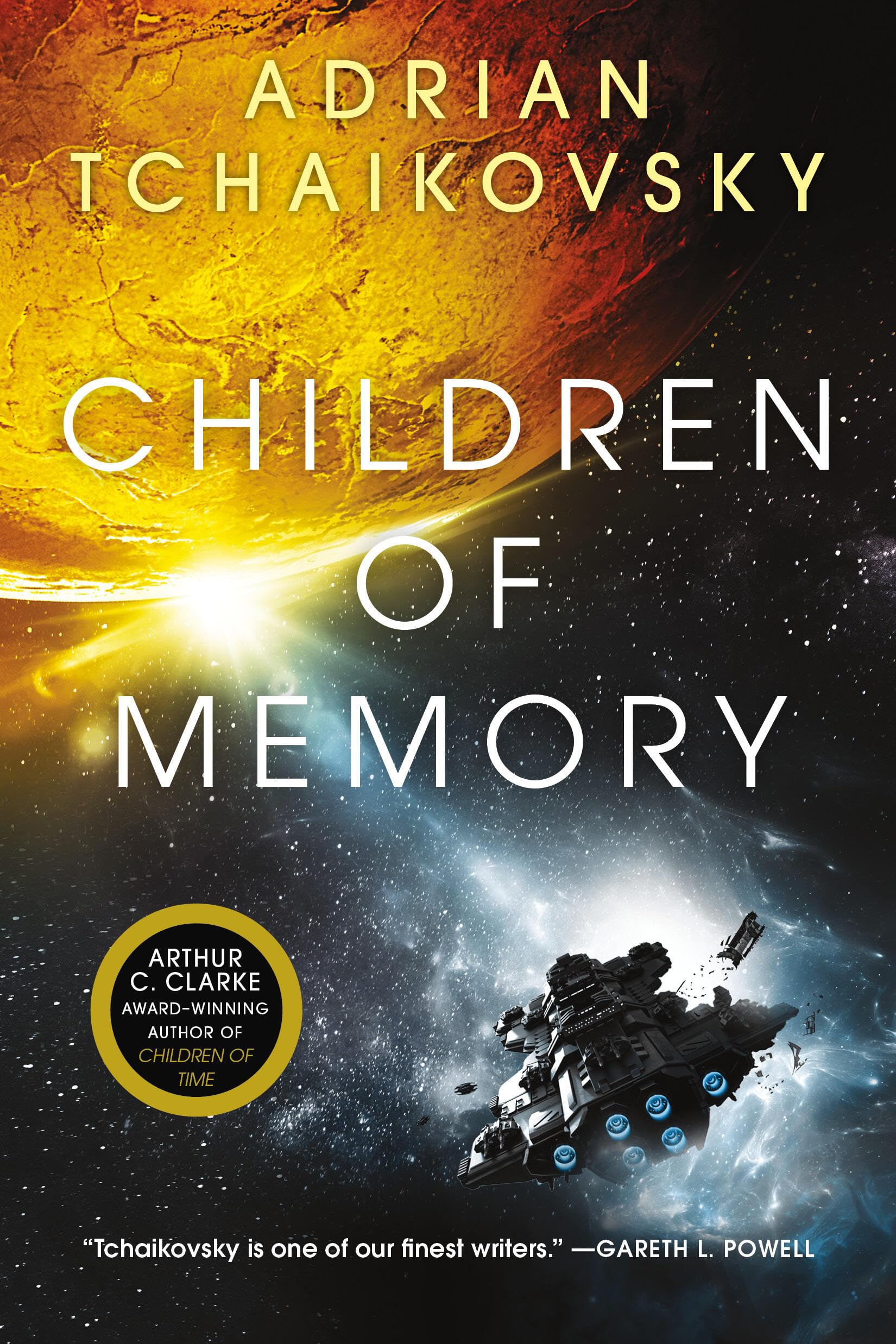
📚心得【Chidren of Time #3: Children of Memory】 by Adrian Tchaikovsky, 2022
#異種族視角 #殖民 #跨越多時代 #寓言故事 #行為主義
Children of Time系列第三集《Children of Memory》的故事一樣一次主要只集中在一個星球上,但較特別的是這次的主角是搭乘世代方舟來到遙遠星系潛在移居星球的人類們,他們嘗試克服物理上的困難與道德問題,延續人類物種,但種種跡象都表明事情沒那麼簡單。
看完第三集(這集的標題實在下的恰到好處),心情有些五味雜陳,一方面覺得作者有在做新嘗試,一方面覺得劇情走向已經慢慢落入意識流走向,個人不是那麼喜歡。
還是會期待有第四集,但目前看起來會變得很玄學,畢竟…最後出現的新種族好像有些奇特。
以下開始雷。注意,這部一旦雷起來,整部看起來會有些空虛 😆
首先,第二部結尾時章魚們揮舞著自動思考的觸手們變出了FTL引擎。雖然這對整個劇情沒有太大的影響,時間在這個科技階段已經不是最大的障礙(仍然是,但有方法無限延續生命),我還是認為FTL旅行應該要設定為不可能。想想,旅行速度較光速快,代表自己到達目的地的時間早於自己產生的輻射(光等)傳到目的地的時間,這意味著物體能以大於宇宙中已知訊息的最大速度行進,從邏輯上講以這樣的速度行進的物體已經能夠穿越到過去了,畢竟會比自己傳出的訊息更快到達。
這次嚴格說來和第二集相同,算加入了2個種族,其中一個烏鴉種族Corvid的加入蠻唐突的,故事看一看就直接說「啊,對了這是我們的地球化計畫產生的新成員喔」,有種"我是不是少看了一集"的感覺;另外Corvid的說話方式有點像LLM AI,有時語法會很奇特,有些讓人摸不著頭緒,閱讀理解上比較有困難。
這次的共生種族文明們觀察到的星球,是一個由舊人類殖民,但生物多樣性不足、生態逐漸浩劫的文明,應該直接毀掉他們的現有文化、以高科技避免他們受苦,還是該放任他們掙扎、想辦法找出自己的路?感覺和我們看原住民文化保留時有點相像,但當然情況不一樣,現實中的原住民們自己活得好好的,而故事中的殖民者們當下看來是快因生態浩劫而死光了。
劇情敘事上,敘事時間線超混亂,雖然是劇情上故意的,但真的會讓讀者摸不著頭緒,有些地方真的讀起來很痛苦,飄來飄去的,好像我現在讀什麼根本都不重要,之後都會被其他故事蓋過。例如一開始“觀察到行星上有文明活動”,到後來只是"本來就沒觀察到有活動",只是最後還是下去看訊號源,主角好像就被模擬洗掉先前的記憶,時間線開始大混亂。
最後,進入本集討論的核心思想:
• 像AI般只是模擬但認為自己是實際存在的人物,是否值得拯救?有無人道問題?
• 任何自稱有“知覺”(sentience)的思考個體,牠們的“自我”又是否只是種模擬(simulation)?哪個世界才是真實的?或者全是真的?
整體來說,也許世上沒任何一種生物是“有知覺的”,只是足夠複雜的反射與編程網絡構成有知覺的錯覺,結合與外在環境的互動,進而刺激大腦、讓產生出自己與其他個體不同的“透過物理大腦內模擬出來的自我”。
以這樣的行為主義角度來看,我們並不比虛實鏡子另一端的“模擬人物”更為真實,因為兩邊都很可能是假想出來的透過將對方數據化,就能把牠們從“鏡子世界中拯救出來”。實在是很有趣的想法,讓我又再度懷疑了自己是否真實存在、而不是模擬出來的 😆 這樣的thought experiment固然有趣,但最後都一樣落入“我覺得自己是真的,那我就是真的”的窠臼,到底還是要好好過生活。上次讓我大腦這樣一直跑loop的大概是《Blindsight》了,也是好一段時間沒體驗到existential crisis了。
意識流方面,我還是比較喜歡《Bobiverse》系列的做法:真實的自己就只有一個,複製出去的只要開始有與自己不同的input,就已經不再是自己了;而虛擬的角色只要覺得自己夠真實,那當然是可以認為是有自我的,只是“你的自我標準可能與人類對自己的自我標準不同”罷了。不要凡事都以人本的角度來看,人類的觀點只是人類的觀點,過於侷限。
IMO總分:78分,劇情上很單薄、科學上有點扯,但核心思想描述明確、值得深思的優秀續作。
核心思想:★★★★★ 核心討論議題是否有趣*5
劇情細節:★★★★☆ 綜觀整體劇情的質與量*4
角色刻畫:★★★★★ 角色群的必要性與深度*3
科學軟硬:★★☆☆☆ 是否符合現實物理現象*3
結局滿意:★★★★☆ 結局滿意度與有無餘韻*3
易讀程度:★★☆☆☆ 閱讀時章節是否難消化*2
#Alien_Perspective #Colonization #Spanning_Eras #Folktales #Behaviorism
The third book of the 《Children of Time》 series, titled 《Children of Memory》, once again focuses primarily on a single planet but introduces a unique twist: this time, the main characters are humans who have traveled to a distant galaxy via generation ships in search of potential colony worlds. They're also struggling to overcome both physical challenges and moral dilemmas while attempting to preserve the human species, but things are a lot more complex than it seems.
After finishing this third volume, which the title feels fittingly apt, I’m left with mixed emotions. On one hand, I appreciate that the author is trying new things, but on the other, the story’s direction is increasingly leaning toward an abstract and illusory style that I don’t particularly enjoy.
I still hold out hope for a fourth book, though it seems like it might take on a more mystical or speculative tone. After all, the new species that appear toward the end are quite intriguing.
Alright, here comes the critique and spoilers. Note: Once I start “unpacking” this one, it feels a bit hollow 😆
First off, at the conclusion of Part Two, the octopuses waved their automous tentacles and “invented” FTL drives. While this doesn’t have a massive impact on the overall plot, since time is no longer as much of a barrier once you have great life extension techs, I still believe that FTL travel should be rendered impossible. Consider this: traveling faster than light means you arrive at your destination before the radiation (light, etc.) you've emitted even reaches there. This logically implies that an object moving at such speeds could potentially travel into the past, as it would arrive before its own messages. All and all, FTL travel in hard sci-fi typically requires rigorous justification, and their explanation feels a bit hand-wavy.
Same as book 2, we also get 2 new species in this one, Corvid and the Imiri (they also call themselves “people of Landfall”). However, I feel like the way Corvid was introduced feels somewhat abrupt. Not much storytelling of their discovery was given, leaving little room for audience engagement or comprehension.
Moving on to the core stuff:
• Is it worth saving a being that exists only as a simulation but believes itself to be real? Are there ethical issues involved?
• For any entity claiming to have "consciousness" (or sentience), is its "self" merely a simulation from another reality's perspective? Which reality is the true one, or are all realities genuine?
In general, perhaps no creature in the world truly possesses "consciousness." Instead, it's just a complex network of reflexes and programming that creates the illusion of consciousness, combined with interactions with the external environment. This stimulates the brain to create a sense of self that is distinct from other individuals — a self simulated within the physical brain.
From this behaviorist perspective, we are no more "real" than the "simulated characters" on the other side of the virtual mirror. Because both could very well be hypothetical constructs. By digitizing them, we can "rescue" them from their "mirror world." This is an intriguing concept that makes me question once again whether I truly exist or if I'm just a simulation 😆. While such thought experiments are fascinating, they ultimately lead to the same dead end: "If I feel real, then I am real." At this point, it's best to move on with life. The last time my mind was stuck in this loop was during 《Blindsight》, and it's been a while since I've experienced an existential crisis.
When it comes to consciousness, I still prefer the approach taken in the 《Bobiverse》 series. There will only be one real me, and any copies will cease to be me once they start having different inputs. Virtual beings, on the other hand, can have a sense of self as long as they feel sufficiently real. However, it's important to note that "thier standards for selfhood may differ from human standards." It's unwise to view everything through a human-centric lens; after all, human perspectives are just one among many.
IMO Rating: 78. A thin plot, a few scientific missteps — but an intriguing follow-up with a clear and thought-provoking core concept.
Core Theme: ★★★★★ (*5)
Plot Quality: ★★★★☆ (*4)
Character Development: ★★★★★ (*3)
Science Validity: ★★☆☆☆ (*3)
Ending Satisfaction: ★★★★☆ (*3)
Readability: ★★☆☆☆ (*2)


留言
張貼留言